
Keep dishwasher salt and rinse aid on separate labels
Illustrative inputs, not verified product specifications or care recommendations.The household question
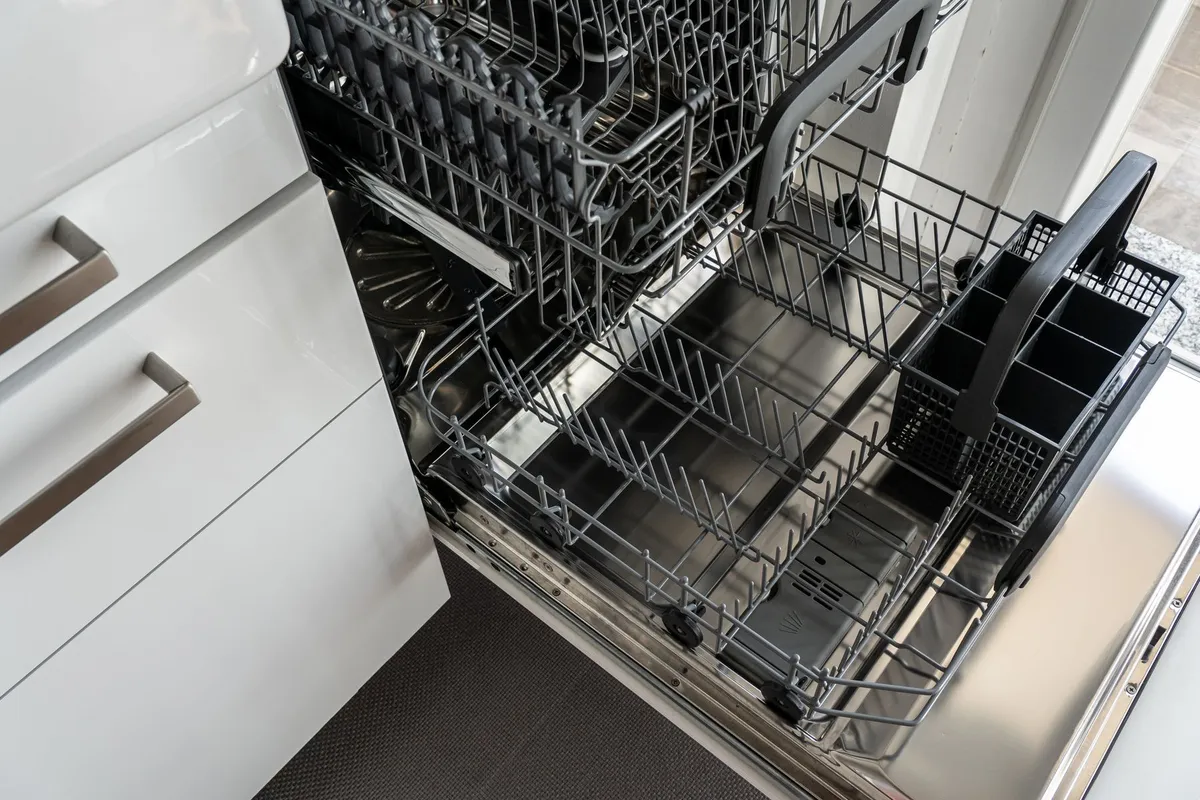
The appliance cupboard stores both refill products.
Measurements and assumptions
Record A
| Full refill packs | 1 |
|---|---|
| Capacity per pack (ml or g) | 1000 |
| Open refill remaining | 100 |
| Amount per refill | 200 |
| Last refill date | 2026-11-01 |
| Measurement unit (g or ml) | g |
| Item name | Dishwasher salt |
| Storage location | Household supply shelf |
| Minimum stock | 0 |
Record B
| Full refill packs | 1 |
|---|---|
| Capacity per pack (ml or g) | 250 |
| Open refill remaining | 50 |
| Amount per refill | 50 |
| Last refill date | 2026-11-01 |
| Measurement unit (g or ml) | ml |
| Item name | Rinse aid |
| Storage location | Household supply shelf |
| Minimum stock | 0 |
Calculation and observed tool result
Record A
Stock = 1 × 1000 + 100 = 1,100 g; floor(1,100 ÷ 200) = 5 refillsRecorded quantity: 1,100 g.
Record B
Stock = 1 × 250 + 50 = 300 ml; floor(300 ÷ 50) = 6 refillsRecorded quantity: 300 ml.
Carry out this task
- Open the linked tool for Record A.
- Name each product and select its own measurement unit.
- Check each result separately; follow the interpretation before retaining both records as physical stock.
What the result means
The records describe five salt refills and six liquid refills separately.
A mistake to avoid
A combined numerical total would mix grams with millilitres.
Limits of this example
Product identity matters even when the packages look similar.
Open Dishwasher Salt & Rinse Aid Refill Tracker · How to Track Household Consumables