
How to Build a Simple Pantry Inventory
A pantry inventory should help you answer a small set of questions: what is open, how much is usable, and where are the reserves? Build it shelf by shelf instead of entering every food at once.
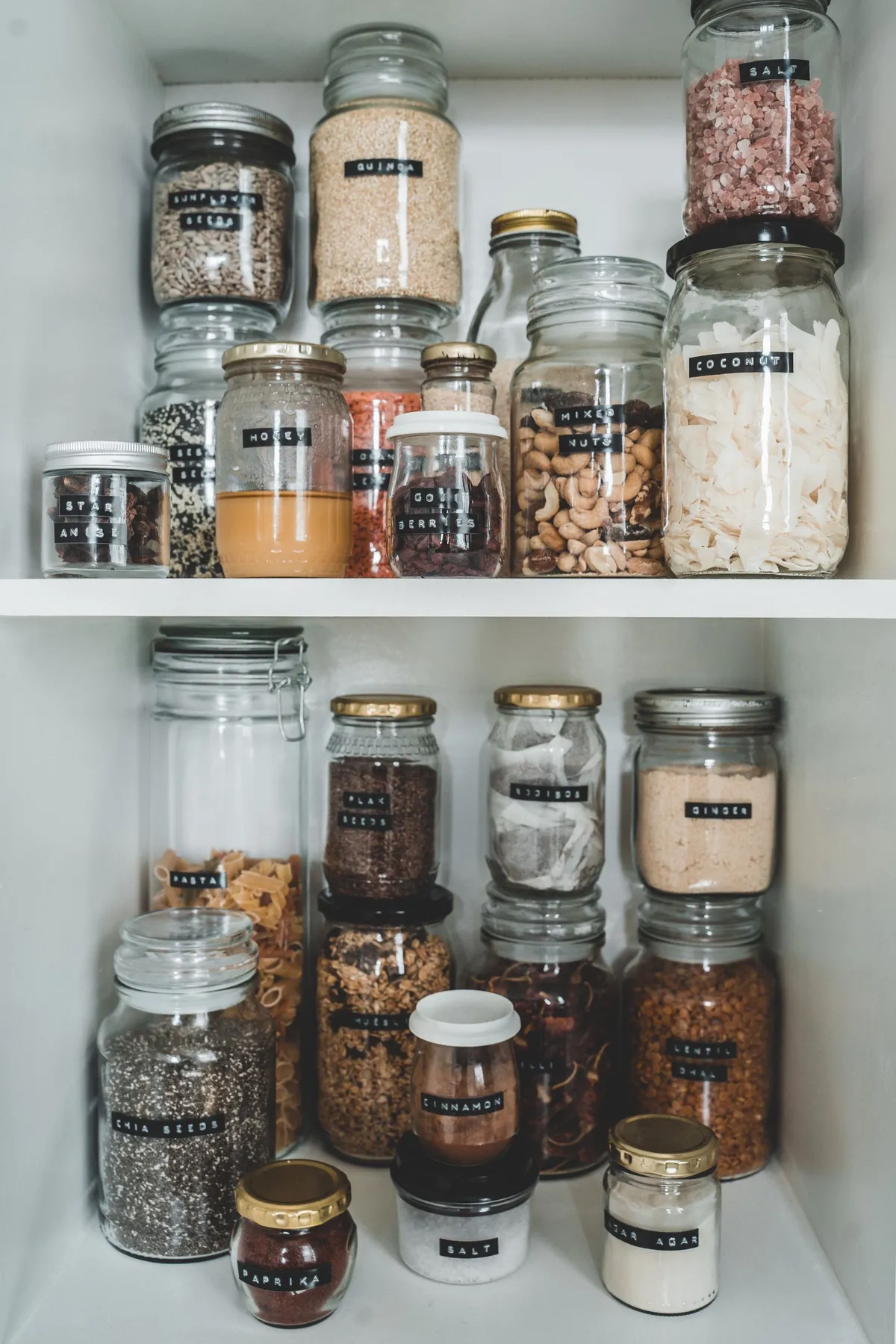
A practical workflow
- Choose a starting group such as baking supplies. Weigh the open pack and copy the sealed-pack weight from its label.
- Create a separate record for each ingredient and package specification. Note the shelf or container location without adding personal household information.
- Enter the amount used by one recipe only when you want an estimated number of complete bakes. Use grams consistently for stock and recipe amounts.
- During a weekly review, check the open remainder first. Receiving a new pack changes sealed stock; transferring flour to a jar changes its location, not the total mass.
Worked example
Two sealed 1,000 g flour packs and 300 g in a jar give 2,300 g. A recipe using 250 g permits floor(2,300 ÷ 250) = nine complete bakes, with 50 g left over after those nine bakes.
A common mistake
Changing a record name from grams to kilograms does not convert the stored inputs. To use this gram-based form with 2.5 kg, enter 2,500 g. A 0.25 kg recipe amount becomes 250 g.
Questions
Should different flours be combined? Keep them separate if they are not interchangeable for your recipes.
Does the tool judge pantry shelf life? No. Use product labels and appropriate food-storage guidance separately.
Limits to keep in mind
A calculation assumes all counted stock is available for the chosen recipe; reserved ingredients need a separate record or a clear counting boundary.